
Indulge in comfort, experience timeless luxury in some of the world’s most opulent, ancient palace hotels in seven historically & culturally most important places in India. Relish the sights of the amazing architecture of some of the most famous UNESCO World Heritage Sites in India. The sight of the Taj Mahal in full moon light and at sunrise along with views 11 other world heritage sites will be etched in your memory for ever. Roundtrip international flights, four domestic flights, air-conditioned luxury coaches and/or car/SUV with non-alcoholic drinks onboard, and charges & fees for all services in India are included in the price. The hotels in this group tour are not only the best in India but most of them have been rated among the best in the world by prominent international travel magazine readers.
SCHEDULE: From San Francisco on November 22 and return to San Francisco on December 6, 2026.
Schedule
From Terminal 3 board Air India flight at 10 AM. (please call for flights from other airports)

Arrive in Kolkata Airport at 2.45 PM. Depart from Kolkata at 4 PM. Arrive at Indira Gandhi International Airport in New Delhi at 6.25 PM. Traditional Welcome with marigold garlands and transfer to The Oberoi Hotel, a 5-star luxury hotel in the heart of the New Delhi, with views of the Delhi Golf Course, Lutyens Delhi, close to India Gate, Parliament, Prime Minister’s office, President’s residence etc. It features elegant rooms, diverse dining options, and amenities like a swimming pool and spa, blending classic style with modern luxury. The hotel is close to cultural sites like Humayun’s Tomb, making it a distinguished address in the capital. The hotel is celebrated for providing a luxurious and attentive experience, making it a top choice for travelers seeking luxurious comfort and quality in the heart of the city. After check-in, shopping for silk and special fabrics as well as custom tailored dresses in a local emporium. Overnight in Oberoi Hotel.
After breakfast in hotel, Sightseeing of Qutub Minar minaret and the mosque (a UNESCO World Heritage Site). Its construction was started by the first Islamic Sultan of Delhi, Qutubuddin Aibak in 1198 CE. Qutubudin-Aibak was born in Turkestan of ethnic Mamluk descent. This was a region where youth went out to neighboring countries and joined their armies as mercenaries. They were enslaved when the army they were fighting with lost. Qutbuddin was sold to the Qazi (Islamic judge) of Nishapur in Persia. There he became favorite of his master because of his skills of horse-riding and archery among other warrior abilities. Qazi’s sons were jealous and they sold him after the Qazi’s death. He ended up as slave of Sultan Muhammad of Ghur province of Afghanistan. He led Sultan of Ghur’s army in the 1st and 2nd battle of Tarain and was appointed Governor of Lalkot, the capital of the last Hindu Chauhan dynasty kingdom. When Muhammad of Ghur was assassinated, Qutubudin-Aibak declared himself sovereign monarch and started the construction of Qutub Jami Mosque (a.k.a. Quwwat ul Islam Mosque) and Qutub Minar. The construction of minaret did not complete in his lifetime and many later Islamic rulers of various successive dynasties left their mark on this monument, which is now 5 stories high and 73 meters or 240 feet tall. The mosque was constructed using architectural elements of 27 Hindu and Jain temples that were demolished to build it. Much of the decorative pillars and facades of walls in the mosque were used without alteration in the new mosque, only the Arabic verses from the Quran were added new, sculpted by Hindu artisans who did not know the Arabic language and curved the endings of letters as they did with Sanskrit language carvings. The Qutub Minar Complex was inscribed as UNESCO World Heritage Site in 1993.
Later sightseeing of the Second Mughal Emperor Humayun’s Tomb – its architecture may have influenced the construction of the Taj Mahal in Agra. Emperor Humayun died just six months after winning the throne of Delhi in 1556 CE. His widow, Hamida Bano Begum (a.k.a. Haji Begum) supervised its construction under Mughal Emperor Akbar’s rule. Having recently returned from Persia and its architect, Mirak Mirza Ghiyath, being a Persian, the monument has elements of Persian and Hindu architecture blended in it. Many later Mughal rulers are also buried in this mausoleum. Humayun’s Tomb inscribed as UNESCO World Heritage Site in 1993. Later drive to the India Gate war memorial for a photography stop. Drive past the government buildings of the British colonial period. Lunch will be in an exclusive New Delhi city restaurant.
In the afternoon drive to the Red Fort (Lal Qila) in Delhi is a 17th-century fort built by Mughal Emperor Shah Jahan, known for its massive red sandstone walls and a complex of pavilions, palaces, and gardens designed with ornate Mughal and Persianate architectural styles. Key features include the Diwan-i-Am (Hall of Public Audience) and Diwan-i-Khas (Hall of Private Audience), linked by the Nahr-i-Behisht (Stream of Paradise). It now serves as the location for India’s annual Independence Day flag-raising ceremony. It was designated a UNESCO World Heritage Site in 2007, recognizing its global cultural importance. After extensive sightseeing of the Red Fort, a short drive further in to the heart of old Delhi (called Shahjahanabad during the 5th Mughal Emperor’s reign and later) is another massive monument built by the same Emperor, the Jama Masjid (Friday Mosque). Enjoy a thrilling cycle rickshaw ride in the narrow, busy lanes of the old Delhi bazaar near Chandni-chowk Bazaar. Dinner and overnight in The Oberoi Hotel.


After breakfast at hotel, drive about 145 miles to Agra. Enroute sightseeing of the Tomb of Itmad-ud-Daulah. This is the mausoleum built under supervision of Empress Nur Jahan for her parents, Mirza Ghiaz Beg and Begum Asmat in 1628 CE almost 7 years after her father’s death. Mirza Ghiaz Beg received the title of Itmad-ud-Daulah or ‘Lord of Treasure of the Empire’ from Emperor Jahangir. This was the first Mughal mausoleum built in white marble and decorated with inlay of various shades of Jasper and black marble. It would have influenced the decoration using inlay of semi-precious stones in white marble in the world-famous Taj Mahal.
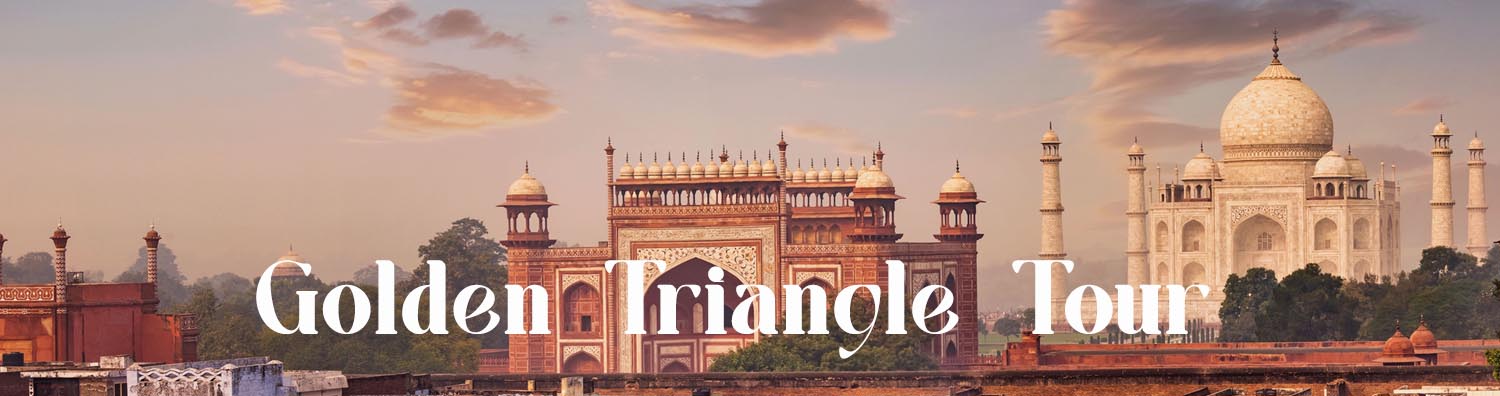
Upon arrival check in to the Oberoi Amar Vilas Hotel. It is the most luxurious hotel in the city and acclaimed as one of the most luxurious in the world by readers of many prominent international travel magazines. The Taj Mahal is extraordinary as much for what it is as how it has escaped the banality of cliché. For 350 years, this monument evokes a sense of wonder. Only by being there can you witness its true majesty, its symmetry, its setting and the delicacy of its carved marble inlaid with precious stones. Now just suppose you were to overlook it from your hotel room? The Oberoi Amar Vilas is 2000 feet from this tribute to love. The lavish interiors and elaborate gardens add to the serenity of the scene. The guestrooms are palatial: all have magical views of the Taj Mahal and are luxuriously furnished with traditional fabrics, white marble, hand-crafted ornaments and every modern amenity. There is a luxury spa offering, a swimming pool, an ornamented ballroom, and fine restaurants to suit the international palate. The lobby lounge is a feast for the eye designed, as it was, around that glorious view of the Taj Mahal.
Lunch will be at Two Saints Bar & Kitchen Restaurant. On the way to hotel wonder at a demonstration of the fine art of Pietra Dure (inlay of semi-precious stones on marble surface) at Subhash Emporium, Agra’s oldest emporium where the not for sale section has some artifacts with inlay work much finer than the most intricate art work in the Taj Mahal itself and perhaps the world’s best. Later be amazed by the largest collection of Zardozi Embroidery Art in India at the Sanskriti Imperial Gems Emporium. This embossed embroidery art is attributed to the Mughal Empress Nurjahan. It uses silver, gold and colored silk thread embroidery on silk and velvet background and is one of the unique arts originating in Mughal period.
After dinner in hotel enter into a dreamworld like atmosphere as you wonder at the gleaming white marble of the Taj Mahal with its semi-precious stone shining in full moonlight. Overnight in Oberoi Amar Vilas Hotel.
Before sunrise experience the highlight of any India tour, the Taj Mahal in the golden glow of sunrise. Ample time in the vast complex for photographing and viewing the intricate Pietra Dure (inlay of semi-precious stones in marble art work, used in the exterior and interior of the monument.
Prince Khurram (later Emperor Shahjahan) and his father Prince Salim met their favorite future queens in a mock market called Meena Bazaar to celebrate the Persian new year festival of Nowruz in Agra Fort. Prince Salim wanted to marry Mehr un Nissa Begum, the daughter of Mirza Ghiaz Beg but Emperor Akbar did not want Shi’a influence in the royal family so he asked Mirza Ghiaz Beg to marry his daughter to an Afghan commander and had him posted in Bihar. Prince Khurram was third eldest and not initially in direct line of succession. He was betrothed to Arjumand Bano Begum on April 5, 1607 but Prince Salim delayed his marriage. After death of Emperor Akbar, Prince Salim ascended the throne with the title of Emperor Jahangir and it was only in May 1610 that Mehr un Nissa, the widow of the Afghan commander finally agreed to marry him. He honored her with the title of Nur Jahan (light of the world) after his marriage. One year later on May 10, 1612, Prince Khurram was finally allowed to marry his beloved Arjumand Bano Begum, who was the niece of Mehr un Nissa (her brother’s daughter and granddaughter of Mirza Ghiaz Beg). She received the title of Begum Mumtaj Mahal after her marriage with the Mughal prince. Begum Mumtaj Mahal was 19 years when they married. She was his constant companion and most trusted advisor. During their 19 years of marriage, she gave birth to 14 children of which only 3 daughters and 4 sons survived. The youngest son, Aurangzeb fought a war of succession against his elder brothers. One after the other he won against all of them, had all the brothers killed and then put his father, Emperor Shahjahan, under arrest in his own palaces in Agra Fort. Queen Mumtaj Mahal died on June 17, 1631 while delivering her 14th child, a daughter, Gauhar Ara Begum, who survived and lived in Shahjahanabad to a ripe age of 75 years.
The site of the Taj Mahal mausoleum was a garden palace of the Maharaja of Amber, Mirza Raja Jai Singh who was following the tradition of his ancestor as close to the Mughal rulers of Agra, Fatehpur Sikri and Delhi. The emperor asked him to give the palace and grounds back to him and gave him other properties in lieu. The queen was temporarily buried in Burhanpur where she died in 1631. The body was transferred to Agra and again temporarily buried in the northwest section of the garden of Taj Mahal where a red sandstone enclosure still marks the site of her temporary burial. The Taj Mahal mausoleum was completed in 1648 according to an inscription on its main gate. The tomb was built exclusively for Queen Mumtaj Mahal, so her grave stone is in the center of the grave chamber. Originally there was a very precious gold screen around the Queen’s grave which was embellished with precious stones. Emperor Shahjahan died on January 16, 1666 in Mussamam Burj Palace in Agra Fort. He was buried by the queen’s side and his grave stone is the one of the few architectural features in this mausoleum that are not symmetrical. For the burial of Emperor Shahjahan by the side of his queen, the golden screen was removed and replaced with a beautifully carved and with semi-precious stones inlaid marble screen. Taj Mahal, was designated as UNESCO World Heritage Site in 1983.
After breakfast at hotel enjoy sightseeing of Agra Fort. Emperor Akbar moved his capital to Agra from Delhi in 1558 but the construction of the Agra Fort started in 1565. It was built on the ruins of an earlier fort named Badalgarh. The first Mughal Emperor Babur had occupied this fort after his victory in the battle of Panipat in 1526 CE. His son, second Mughal Emperor Humayun was crowned in the old fort of Badalgarh in 1530. With about 4000 laborers and craftsmen toiling for 8 years the fort’s construction was completed in 1573. The entire fort was built with narrow flat brick masonry work and laminated with red sandstone from the stone quarry at Sikri village west of Agra. According the Emperor Akbar’s official biography written by his trusted friend, Abul Fazl, there were about 5000 buildings in the fort. Some of these buildings were demolished to make way for white marble palaces of Emperor Shahjahan, facing the Yamuna River, on the eastern side of the fort. Most of the buildings in western side were converted in to soldier’s barracks by the British East India Company. The western part of the fort is still occupied by Indian military. Emperor Akbar’s style was greatly influenced by the architecture of the states of Gujarat and Bengal. It is also very unique because it reflects Emperor Akbar’s tolerant religious philosophy. The best of example of his architecture is visible in the palace popularly called Jahangiri Mahal. In 1666 the great Maratha warrior, Shivaji met with Emperor Aurangzeb but the Mughal Emperor broke his promise and arrested him. He managed to escape in a spectacular manner by hiding in fruit baskets for distribution to poor. The Jat and Maratha rulers occupied Agra Fort in later years. Finally in 1803 the British East India Company captured it and demolished most of its monuments, only about 30 monuments have survived in the south-eastern side of the fort. In 1983 the Agra Fort was declared a UNESCO World Heritage Monument. Lunch at Salt Cafe Restaurant on Fatehabad Road near Taj Mahal.
After lunch visit Sikandara – the third Mughal Emperor Akbar’s mausoleum that he himself designed. Its construction started after the death of Emperor Akbar under supervision of Emperor Jahangir between 1605 and 1613. It is a five-storied building in red sandstone except for the top floor that is made of white marble. The cenotaph of the emperor on top floor is open, without a roof. The main entrance to the mausoleum was probably designed or at least had influence of Empress Nur Jahan. It is conspicuous from the Persian decorative motifs used with inlay of white and black marble in red sandstone. Later in afternoon time to relax and enjoy the vast grounds of one of the world’s most luxurious hotels. Dinner and overnight in Oberoi Amar Vilas Hotel.
After breakfast drive one hour to Fatehpur Sikri for sightseeing of Mughal Emperor Akbar’s deserted capital and the tomb of Sufi saint Sheikh Salim Chishti in the courtyard of the grand mosque. Emperor Akbar did not have a male heir to his throne for a long time. He came to the Sikri village to seek the blessings of the Sufi saint, Sheikh Salim Chishti, who correctly prophesied that Emperor Akbar would have three sons. The emperor moved with his Hindu queen, Jodha Bai, to Sikri village to live with the saint and started building an alternative capital at the site which was earlier a query for red sandstone. The entire capital was built with red sandstone from the ridge on which it is located. The first-born son was named Salim after the Sufi saint. The second was named Murad or the longed one. The third son was named Daniel, probably influenced by the Jesuit priests from Goa who were invited by the emperor to teach him about Christianity. Emperor Akbar developed the philosophy of “Sulah Qul” – living in harmony with all religions. Later he developed his own religion, Din-i-Ilahi or faith of God. His dear friend and official biographer, Abul Fazl, was among the first to convert to the new religion which he described in “Akbar Nama”. Visit the grand Friday “Jama Masjid” and the mausoleum of Sheikh Salim Chishti, which was renovated using the white marble by later Mughal Emperors. After Emperor Akbar moved away from this capital, living there only 14 years, the capital was deserted for more than 400 years until Lord Curzon, British Viceroy of India ordered the Archaeological Survey of India to restore this fascinating capital and this renovation work is still going on. The palaces were all covered with wild forest and wild animals lived in the palaces. The “Dargah” or mausoleum of the saint was never deserted and people from Agra and nearby villages have been coming there to seek the saint’s blessings for centuries. The entire archaeological site of palaces and the mosque were declared a UNESCO World Heritage Site in 1986.
After lunch in Gulmohar Restaurant in the Bagh Hotel in Bharatpur, drive further to Jaipur. JAIPUR CITY was declared a UNESCO World Heritage City in 2019.
Samode Haveli in the historic walled “Pink City” Jaipur was constructed about 225 years ago as the noble residence of the descendants of the ruling Kachhwaha Rajputs. Almost every room in the haveli is unique in its style and interior architecture & decoration. This is the only heritage 5-star hotel within the historic, walled Pink City, Jaipur. Dinner and overnight stay in Samode Haveli in Jaipur.
After breakfast full day sightseeing of Amber and Jaipur starting with a drive through the walled pink city to Hawa Mahal, which is mere facade with about 3 feet deep balconies behind latticed screens where royal family women used to sit to watch the royal processions on the street.
Drive further north through pink city to Amber Fort to enjoy a majestic elephant ride to the hilltop palaces of Sawai Jai Singh, Mirza Raja Jai Singh and Maharaja Man Singh (one of nine jewels of Emperor Akbar’s cabinet of nobles). The Sheesh Mahal and other palaces in the courtyard were constructed during the reign of Mirza Raja Jai Singh I, who was contemporary to Mughal Emperor Shahjahan and had arranged the transportation of white marble from the Makrana marble mines for building the Taj Mahal. Amer Fort was inscribed as UNESCO World Heritage Monument in 2013. On the way back stop at the Jal Mahal Island Palace.
Lunch will be in Miroh Restaurant on M.l. Road, Jaipur.
Jaipur City was designed by Maharaja Sawai Jai Singh and his principal architectural and city planning advisor, Vidhya Dhar Bhattacharya. On July 6, 2019 the entire walled and painted pink city has been declared a UNESCO WORLD HERITAGE CITY.
In the afternoon visit the City Palace including the Royal portraits gallery in the Diwan-i-Am (Hall of Public Audience), the Sarvatobhadra (Hall of Private Audience), the Mor Chowk (peacock) courtyard of Chandra Mahal, the palace where the present head of the Jaipur royal still resides. When he is in the building the family’s royal flag flies on its roof.
For our group there will be a special tour of the personal palace of the present head of the Jaipur Royal Family, Chandra Mahal. Normally this is closed to general public and tourists.
Later wonder at the 16 working astronomical instruments of the Jantar Mantar observatory of Maharaja Sawai Jai Singh. The Brihat Samrat Yantra (large sundial) here has an accuracy of 2 seconds. This masonry astronomical observatory is the largest and best maintained of the five observatories constructed in Ujjain, Varanasi, New Delhi and Mathura. The Jaipur Jantar Mantar observatory was declared the UNESCO World Heritage Site in 2010. The observatory in Mathura was demolished in the colonial British East India Company period. Later rickshaw ride in heritage walled city and transfer to Samode Haveli for dinner and overnight.
After breakfast transfer to airport to board the 6E 7405 flight departing at 10.30 AM and arrive in Jodhpur at 11.35 PM.
On arrival check-in to Taj Umaid Bhawan Palace Hotel. The Marwar Maharajas moved from the Mehrengarh Fort when they constructed the new Umaid Bhawan Palace in 1943. Maharaja Umaid Singh laid foundation stone of the 347-room palace in 1929. Henry Vaughan Lanchester, a contemporary of Sir Edwin Lutyens, the planner of British East India Company’s capital at New Delhi, was selected as the architect. Lanchester designed the building blending western and Indian architectural features referred to Beaux Art or Indo Deco Style. One part of the palace is managed as luxury heritage hotel call Taj Umaid Bhawan Palace, in another part the present owners live while a third part has historical museum open to public. This is first building in India to have an electric operated elevator.
The Polish artist Stefan Norblin painted the murals in the Umaid Bhawan Palace Hotel, working on the palace between 1944 and 1946 for Maharaja Umaid Singh. Norblin created a collection of murals depicting Hindu epics, gods, and animals in the palace’s Art Deco-style interiors, which feature a blend of European modernism and traditional Indian architecture. His murals in the palace feature scenes from the Ramayana: Hindu gods like Shiva and Parvati and the goddess Durga, as well as various animals such as tigers, leopards, and elephants.
After lunch in a city restaurant there will be the sightseeing of the exhibits and palaces in Mehrengarh Fort, an amazingly constructed royal residential fort perched on the lone mountain surrounded by the desert plain around Jodhpur, the blue city of Rajasthan. From top the visitor is surprised with panoramic views of the blue city below. The buildings inside the fort are intricately yet beautifully designed. The interiors of the palaces are covered with colorful paintings with lots of gold foil decorations. Each section is unique in its design. These palaces are so very different from the palaces in other former Rajput capitals. The Mehrengarh Fort was inscribed as UNESCO World Heritage Site in 1973.
Later visit the Jaswant Thada Memorial of former Marwar Maharajas. Half way up the mountain on which the fort is situated is this grand white marble memorial for the former Maharajas of Marwar. The Jaswant Thada Memorial was constructed by Maharaja Sardar Singh to commemorate and honor his father, Maharaja Jaswant Singh I in 1899. The building has unique latticed screens The interior of the memorial is decorated with intricate carvings, latticed screens and colorful frescoes.
Dinner and overnight in Taj Umaid Bhawan Palace Hotel.
After breakfast in the Taj Umaid Bhawan Palace Hotel drive through the Aravali Mountains for lunch at the Fatehbagh Palace Hotel in Ranakpur. Later enjoy the medieval Chowmukha Jain Temple (4-sided temple) that was built in the 15th century. It is dedicated to Lord Adinath Bhagwan (the first Thirthankar or teacher of Jain religion). It is renowned for its intricate architecture, particularly its 1,444 unique, intricately carved marble pillars, a stunning example of Jain craftsmanship that adorns the numerous halls and domes. A notable feature is a deliberately crooked pillar, a reminder of the imperfection of all things. After sightseeing of the temple and its surrounding structures, drive further through the Aravali Mountains to the city of lakes and palaces, Udaipur.
On arrival in Udaipur transfer to Taj Lake Palace Hotel in Udaipur situated on an island in the serene waters of the Lake Pichola. The grand marble edifice was originally constructed in 1746 as a summer palace of the Maharanas of Mewar. The Taj Lake Palace Jetty is a platform on the shore where guests receive a royal welcome with a cold towel to refreshen themselves and a refreshing drink. A small stairwell leads to a smaller deck where the guests can sit and wait for the boats to arrive and ferry them to the white marble island palace. On reaching the island a tall Rajasthan guard with proud moustache, holding a beautiful umbrella welcomes the guests with a traditional Khama Gani (I bow to you with respect in local Mewari dialect) and leads them to the entrance of the lobby. Just before the guests enter the lobby rose petals shower from above to welcome them. Inside the entrance the elegantly sari draped hostess assists you with check-in. There are internal garden and pool facing rooms, the city palace facing rooms and the lake facing rooms. In all there are 83 luxurious suites. Dinner and overnight in the Taj Lake Palace Hotel.
Today, after enjoying a delicious breakfast in the Jharokha Restaurant with views of the lake, the Maharana’s City Palace and its splendid surroundings, your first stop is the majestic Udaipur City Palace, situated above Lake Pichola. This is the largest palace complex in Rajasthan. The Maharanas of Mewar had their original capital in the present-day pilgrimage town of Nagda, 30 kilometers or 19 miles north of Udaipur. It was established by the 1st. Maharana, Guhil, in 568 CE. In the 8th. century CE the capital was moved to Chittor, where the successive Maharanas built the largest Fort and city in contemporary India. Already before the sacking of Chittorgarh by Mughal Emperor Akbar, in February 1568 after a long siege that began in October 1567, the plans for a new capital were under way. The construction of the Mewar Dynasty’s City Palace in Udaipur started in 1559 by Maharana Udai Singh and continued by his successors over a period of about 300 years. Today the visitors see the Mardana (male section) and Zanana (female section) of the museum part of the palace. Apart from these two others sections of the palace are converted in to hotels: “The Shiv Niwas Palace” and “The Taj Fateh Prakash Palace” is now managed by the famous Taj Group of Hotel, who already managed the historic “Lake Palace Hotel. The descendants of the Maharanas of Mewar still reside in one section of the palace.
Walk in front of the City Palace through the Tripolia (3-arched royal entrance) to Jagdish Temple constructed by Maharana Jagat Singhji in 1651, for sightseeing. Dedicated to Lord Vishnu, this is the largest and most splendid temple in Udaipur, offering a glimpse into the city’s religious heritage. As you drive past Fateh Sagar Lake, relish the Sahelion-ki-Bari, the “Garden of the Maids-of-Honor”. This enchanting garden boasts delicately chiseled kiosks, fountains, and elephant sculptures in its four pools. It’s the perfect place to soak in the serene beauty of Udaipur.
After lunch in Ambrai Restaurant in Amet Haveli on the shore of Pichola Lake enjoy a boat ride on the lake which offers a delightful experience of sailing past picturesque Ghats (steps leading down to the water) and palaces. As you cruise along the tranquil waters, you’ll witness the majestic beauty of Udaipur’s famous landmarks, such as the City Palace and Lake Palace, which appear to float on the lake’s surface. One of the highlights of the boat ride is a stop at the island of Jag Mandir, a magnificent 17th-century water palace. This island palace provides a captivating glimpse into the royal heritage and architecture of Rajasthan. It’s a serene and enchanting journey that allows you to immerse yourself in the splendor and history of the lake city.
Dinner and overnight will be in Taj Lake Palace Hotel.
After breakfast at Taj Lake Palace Hotel transfer to airport to board the flight 6E 5185 departing at 9.15 AM to arrive in Mumbai at 10.40 AM. On arrival transfer to the Taj Palace & Tower Hotel. The older part of the hotel was built in 1903. Next to it was originally the Greens Hotel that was constructed in 1890 and operated by Tata Group from 1904 until 1972 when the Taj Mahal Tower was added to the complex. The Taj Palace Hotel is older than the other landmark of Mumbai, the Gateway of India, an arched monument that was erected to commemorate the landing of King-Emperor George V and Queen-Empress Mary at Apollo Bunder on their visit to India in 1911 CE. Built in Indo-Saracenic style, the foundation stone for the Gateway of India was laid on 31 March 1911 CE. The structure is an arch made of Basalt, 26 meters (85 feet) high. The final design of George Wittet was sanctioned in 1914 CE and the construction of the monument was completed in 1924 CE. The Gateway was later used as a symbolic ceremonial entrance to India for Viceroys and the new Governors of Bombay. It served to allow official entry and access to India during the colonial period.
“December 7, 2021: Taj Mahal Palace Hotel of Mumbai is now officially topping the list of world’s most legendary hotel. The data for the same was evaluated by TrustYou, which is the largest aggregator of guest feedback in the globe. The Taj Mahal Palace Hotel is a name that rubs shoulders with hospitality industry’s other finest creations like the Mandarin Oriental in Bangkok, Four Seasons’ George V, and La Reserva, both in Paris. The Taj Mahal Palace Hotel was ranked at the top, after a Media Promoter Score of 95 and strong customer validation as provided by more than nine thousand users”.
Lunch will be in an exclusive city restaurant.
In the afternoon enjoy an architecture tour of Mumbai starting at Chhatrapati Shivaji Maharaj Terminus, also known by its former name Victoria Terminus, is a historic terminal train station and UNESCO World Heritage Site in Mumbai, Maharashtra, India since 2004, Flora Fountain, at the Hutatma Chowk (Martyr’s Square), is an ornamentally and exquisitely sculpted architectural heritage monument located at the southern end of the historic Dadabhai Naoroji Road, called the Mile Long Road, at the Fort business district in the heart of South Mumbai, Mumbai, India. Flora Fountain, built in 1864, is a fusion of water, architecture and sculpture, and depicts the Roman goddess Flora; One of Mumbai’s landmarks, the Rajabai Clock Tower was completed in the 1870s CE and houses the University of Mumbai’s library. Sir George Gilbert Scott modeled the Rajabai Clock Tower on the clock tower of the Palace of Westminster in London. Local businessman Premchand Roychand contributed to the cost of construction and named the tower in memory of his mother, Rajabai. The tower is 85 m (280 ft) tall and has five floors. At a height of 9.1 m (30 ft) from the ground, there are eight statues representing the Indian castes.
Dhobi Ghat (Mahalaxmi Dhobi Ghat) is an open-air human run laundromat in Mumbai, India. The washers, known as dhobis, work in the open to clean clothes and linens from Mumbai’s private people, hotels and hospitals. It was constructed in 1890 CE. One highlight of today’s visit is the area where the film ‘Slumdog Millionaire’ was set, a thriving and industrious quarter called Dharavi.
Mani Bhavan was Gandhi’s Mumbai headquarters for about 17 years, from 1917 to 1934 CE. The mansion belonged to Revashankar Jagjeevan Jhaveri, Gandhiji’s friend and host in Mumbai during this period. It was from Mani Bhavan that Gandhiji initiated the Non-Cooperation, Satyagraha, Swadeshi, Khadi and Khilafat Movements. Gandhiji’s association with the charkha began in 1917 CE, while he was staying at Mani Bhavan. In his November 2010 visit, Barack Obama became the first high-profile international visitor to visit the Mani Bhavan Gandhi Sangrahalaya in the last 50 years. Before him, only Martin Luther King Jr. had visited Mani Bhavan in the 1950s; the Hanging Gardens, in Mumbai, also known as Pherozeshah Mehta Gardens, are terraced gardens perched at the top of Malabar Hill, on its western side, just opposite the Kamala Nehru Park. They provide sunset views over the Arabian Sea and feature numerous hedges carved into the shapes of animals;
The eclectic architectural heritage of the Maximum City includes: Gothic-Revival, Indo-Sarcenic, Edwardian Neo-classical, Art-Deco styles. The remarkable Bombay-Gothic structures are the Victoria Terminus (now known as the Chattrapati Shivaji Terminus), the Bombay University, the Rajabai Clock-Tower, the Bombay High Court, the David Sassoon Library, the Elphinstone College, St. Xavier’s College, Sir J.J. School of Art and the Crawford Market. The Wesley Church in Colaba, the Gloria Church in Byculla and the Mount Mary Church in Bandra are also built in this style.
Marine Drive: overview of art Deco buildings from sunset point near National Center for Performing Arts – the art-deco buildings of Marine Drive as well as the Victorian Gothic architecture in Mumbai have been declared the UNESCO World Heritage Sites in 2018; Dakhma or Tower of Silence, Malabar Hill, Mumbai is the religious funeral place of Zoroastrians. Overnight will be in the Taj Mahal Palace & Tower Hotel in Mumbai.
After breakfast in the Taj Mahal Palace & Tower Hotel, enjoy a 25 minutes speedboat ride to Elephanta Caves on the Gharapuri island in Arabian Sea. The rock-cut Elephanta Caves were constructed about the mid-5th to 6th centuries CE. The most important of these caves is the number 1 cave, which measures 128 feet from front of the cave. 23 feet high idol of Sadashiva dominates this cave entrance and represents three aspects of Shiva: The Creator, the Preserver, and the Destroyer, identified, respectively, with Aghora or Bhairava (left half), Taptapurusha or Mahadeva (central full face), and Vamadeva or Uma (right half). Representations of Nataraja, Yogishvara, Andhakasuravadha, Ardhanarishwara, Kalyanasundaramurti, Gangadharamurti, and Ravanaanugrahamurti are also noteworthy for their forms, dimensions, themes, representations, content, alignment and execution. These caves are a UNESCO World Heritage Site since 1987.
Lunch in a city restaurant.
In the afternoon explore the Bhau Daji Lad Museum and Chatrapati Shivaji Maharaj Vastu Sangralaya Museum. Dinner and overnight in Taj Palace & Tower Hotel.
After breakfast at Taj Palace & Tower Hotel drive about 15 miles in about 1.5 hours to Mumbai domestic airport to board the flight 6E 882 departing at 9.05 AM to arrive in Hyderabad at 10.20 AM. On arrival in Hyderabad airport transfer in about half an hour (about 12 miles) to one of India’s most historic palaces – the Taj Falaknuma Palace Hotel.
Falaknuma is a former palace and currently a luxury hotel in Hyderabad, Telangana, India. It originally belonged to the Paigah family, and was later owned by the Nizam of Hyderabad. It is on a hillock and covers a 32-acre area in Falaknuma, 3.1 mi) from Charminar. Built by Nawab Sir Viqar-ul-Umra, Prime Minister of Hyderabad state and the uncle and brother-in-law of the sixth Nizam, Falak-Numa means “Like the Sky” or “Mirror of Sky” in Urdu. At the time of its completion in 1893, it was the tallest building in Hyderabad. It was designed by the British architect William Ward Marret, completely in white marble and its architecture reflects the Nawab’s avid traveling abroad, it is mainly Italian and Tudor in style. The palace post renovation carried out in 2010 today is a part of Taj Group and has been renamed as Taj Faluknama Palace. The Taj Falaknuma Palace Hotel’s official website describes it as follows:
“Elevated 1998 feet above sea level, the Taj Falaknuma Palace in Hyderabad, once the regal abode of the Nizams, exudes the refinement of its historic era. Embark on your odyssey aboard a horse-drawn carriage, attended by the palace’s butlers, poised to fulfil your every regal whim. Ascend the grand staircase, treading the same path as the illustrious Nizams, nobility, eminent heads of state, and captivating begums. Under the meticulous stewardship of Her Highness Princess Esra, the last Nizam’s Turkish wife, each of the 60 rooms and suites within this luxury haven has been fastidiously revitalized. Revel in expansive vistas that unfold over the palace courtyards, offering an encompassing view of the 400-year-old city of Hyderabad below. Embark on a journey through the region’s opulent culinary legacy at our exquisite fine-dining establishment, Adaa. Begin your day in refined elegance at Gol Bungalow, and later, indulge in the refined tradition of Afternoon High Tea at Celeste. Conclude your evening with a private dinner in the serenity of the Southeast Garden. The regal city of Hyderabad seamlessly marries contemporary living with its ancient heritage. Our dedicated concierge stands ready to curate bespoke tours, whether focussed on art, culture or shopping ensuring you experience the wealth of historical landmarks that grace the vicinity. Taj Falaknuma Palace, Hyderabad, stands not only as the epitome of luxury in the city but as one of the world’s truly exceptional hotels”.
(1) After check-in drive about 6 miles to Golkunda Fort and ruined city lying 5 miles west of Hyderabad in western Telangana state of southern India. From 1518 to 1591 it was the capital of the Quṭb Shāhī kingdom (1518–1687), one of five Muslim sultanates of the Deccan. The territory of Golconda lay between the lower reaches of the Godavari and Krishna rivers and extended to the Bay of Bengal coast. In 1687 the ruling dynasty of Quṭb Shāhī was overthrown by the Mughal emperor Aurangzeb, and Golconda was annexed to the Mughal Empire (1526–1857). The fortress is 3 miles in circumference, with concentric masonry block walls. Palaces, mosques, and the Quṭb Shāhī tombs still remain intact and are a major tourist attraction. Historically, the Golconda region was renowned for its diamonds, derived from the conglomerate rocks of the nearby hills. The world-famous Koh-i-noor and Great Mogul diamond were believed to be originated in these mines. The Golconda Fort also showcases incredible engineering feats that testify to its ingenuity. It features mounted cannons, drawbridges, and eight grand gateways, with the most notable gateway being Fateh Darwaza (Victory Gate). One of its remarkable features is the acoustical effects near its dome entrance – when you clap, you can hear the echoes reverberate all the way to a pavilion on a hill almost a kilometer away.
(2) After sightseeing of the Golkunda Fort visit the Qutub Shahi Tombs – a series of seven out of eight Qutub Shahi dynasty rulers’ mausoleums built in typical Indo-Islamic / Qutub Shahi architecture, located close to Golkunda Fort. The rulers buried here are: (1) Sultan Quli Qutub-ul-Mulk who ruled from 1518 to 1543, (2) Jamshed Quli Qutub Shah who ruled from 1543 to 1550, (3) Sultan Quli Qutub Shah (1550), (4) Ibrahim Quli Qutub Shah Wali, ruled from1550 to1580), (5) Muhammad Quli Qutub Shah ruled from1580-1612, (6) Sultan Muhammad Qutub Shah who ruled from 1612 to 1626 and (7) Abdullah Qutub Shah who ruled from 1526 to 1572.
(3) Purana Pul – Prince Muhammad Quli Qutb Shah was in love with Bhagmati, a Hindu woman who lived on the other side of river Musi. His father Sultan Ibrahim Quli Qutub Shah decided to build the bridge in 1578 so that his son could cross over the river safely. For this reason, it was also known as ‘Pyar-ana pul’, meaning ‘In Love Bridge’ in English. It has 22 arches and is 600 feet long and 35 feet broad and 54 feet above the riverbed. The government organized Valentine’s Day in the year 2000 on this bridge, which is recognized as the bridge of lovers. It connected Golkunda with Hyderabad originally but is now defunct and a vegetable market is located on it.
(4) Laad Bazaar – is a busy ethnic bangles and other artificial jewelry market in the lanes near Charminar in Hyderabad.
(5) Charminar is perhaps the most prominent landmark of Hyderabad, often called the Arc de Triomphe of the East, derives it name from the four minarets on its roof. It was built by Sultan Mohammed Quli Qutb Shah in 1589 supposedly in honor of his wife Bagmati. It is also believed that its construction was to commemorate the end of a devastating plague that affected the city. According to French traveler, Jean de Thévenot who travelled in the 17th century, the reason for its construction was to mark the beginning of the second Islamic millennium. It took two years to complete at a cost of Rupees 900,000.00. The inclusion of Char Minar in the UNESCO World Heritage Sites in being sought at present.
(6) Mecca Masjid near Charminar is one of India’s oldest and largest mosques. Its construction began in 1614 under the reign of Sultan Muhammad Quli Qutb Shah, the fifth ruler of the Qutb Shahi dynasty. Its name is derived from the fact that the bricks used to make it used soil from the holy city of Mecca in Saudi Arabia. Its area is 220 feet x 177 feet and it can accommodate 10,000 devotees for prayers. It has five arches on the north, south and east sides. Its roof is supported by intricately sculpted granite pillars
(7) Situated just 2km away from the heart of the city, Hussain Sagar is one of the most popular tourist places in Hyderabad. The lake connects two parts of the city (Secunderabad and Hyderabad). The largest artificial lake in Asia, Hussain Sagar Lake was excavated in 1562 AD during the reign of Ibrahim Quli Qutub Shah. Built on the tributary of River Musi, the lake has been named after Hussain Shah Wali. Hussain Sagar Lake was initially built to cater to the irrigation needs and other water needs of the city. Until the year of 1930, it was used for the same purpose.
(8) Next visit the Chowmahalla Palace, the seat of power of Asaf Jahi Dynasty that was founded by Nizam-ul-Mulk Asaf Jah I, Mir Kamar Uddin Khan (born August 20, 1671; ascended throne on July 31, 1734 and died on June 1, 1748. He was followed by 9 more rulers until Asaf Jah VII Mir Usman Ali Khan who was deposed on September 14, 1948 and died on February 24, 1967. After his death the Government of India recognized the Asaf Jah VIII Mir Barkat Ali Khan, born on October 6, 1933, Nizam of Hyderabad from February 24, 1967 until he was deposed on November 5, 1971 when Prime Minister Indira Gandhi abolished the Privi Purses of former rulers and died on January 15, 1923. His son, Asaf Jah IX was born on July 23, 1960, ascended as head of former royal family on January 23, 1923 and is still the head of the royal family.
Construction of the Chowmahalla Palace started during the reign of Nawab Salabath Jung, the third son of Asaf jah I around 1751 AD. When Nizam Ali Khan Asaf Jah II shifted the ruling capital from Aurangabad, in what is now Maharashtra, to Hyderabad. in 1663 He added many Mahals during his reign.
The Chowmahalla (four palaces) stand symmetrically opposite to each other, around a large cistern of water, forming a protective enclave of grandeur and historic connection. The buildings were functional as a combination of living quarters for the royal families, zenanas for the women, grand halls for regular public audiences and other administrative buildings. Successive Nizams expanded and renovated the Chau Mahalla palaces, introducing new buildings to the area. Originally, the total area of the complex was 45 acres. Over time, it has become a compact 12 acres, comprising of the new Khilwat Mubarak, the four palaces – Afzal Mahal, Aftab Mahal, Mehtab Mahal and Tahniyat Mahal, a grand Clock Tower, a Buggy Khaana which stores the splendid vehicles used by the Nizams, and an assortment of other buildings and heritage structures.
Fascinated by Persian architecture, the new Khilwat Mubarak was commissioned by HEH Mir Osman Ali Khan Asaf Jah VII in 1912 and completed in 1916. Today, the Chowmahalla Palace stands as a testament to the possibilities of a strong connection to the past and an even stronger sense of responsibility for the present and the future. With the unwavering support of Princess Esra Birgen Jah, the Palace is now a restored cultural oasis in the heart of Hyderabad. It is the state’s only Palace to have been decorated with UNESCO’s 2010 Award of Merit, in addition to being awarded the prestigious INTACH Heritage Award twice.
Dinner and Overnight in Taj Falaknuma Palace, Hyderabad
After breakfast in hotel visit the famous Salar Jung Museum. Later transfer to Hyderabad airport to board the AirIndia 5.30 PM flight to arrive in Delhi at 7.55 PM. Transfer to Deventure Sarovar Portico Hotel in Kapashera for farewell dinner. About 11 PM transfer to Indira Gandhi International Airport.
Board international direct / non-stop flight at 2.15 AM and arrive in San Francisco at 7 AM.
Additional Information:
PRICE call (559) 443 9709 or email indiatraveller@gmail.com with following hotels (other hotels can be discussed also.)
| City | Hotel | Room Category | NO. NIGHTS |
|---|---|---|---|
| New Delhi | Oberoi Hotel | Luxury Room | 2 |
| AGRA | Oberoi Amar Vilas | Premier Room | 2 |
| JAIPUR | Taj Jai Mahal Palace | Palace Room | 2 |
| JODHPUR | Taj Umaid Bhawan Palace | Palace Room | 1 |
| UDAIPUR | Taj Lake Palace Hotel | Palace Room | 1 |
| MUMBAI | Taj Mahal Palace & Tower | Palace Room | 2 |
| HYDERABAD | Taj Falaknuma Palace | 2 | |
| NEW DELHI | Holiday Inn Airport | Farewell Dinner | 1 |
PRIVATE TOURS
| Number of Persons | Price Per Person |
|---|---|
| Single person traveling alone | US$ 13,105.00 |
| 2 persons traveling together | US$ 11,740.00 |
Group Tours
| NUMBER OF PERSONS | PRICE PER PERSON | SINGLE OCCUPANCY SUPPLEMENT |
|---|---|---|
| 3-4 persons traveling together | $ 10,385.00 | $ 3950.00 |
| 5-9 persons traveling together | $ 9,870.00 | $ 3950.00 |
| 10-14 persons traveling together | $ 9,190.00 | $ 3950.00 |
| 15-20 persons traveling together | $ 8,610.00 | $ 3950.00 |
| 21-30 persons traveling together | $ 8,480.00 | $ 3950.00 |
The price with above mentioned hotels includes:
- Roundtrip international airfare from Fresno to New Delhi (nonstop/direct flight from San Francisco to New Delhi)
- 13 Nights’ accommodation in double/twin Room at all 5-star hotels/ Lodges as mentioned in program
- All transfers & overland trips by air-conditioned Luxury Bus or
for 1 to 4 persons traveling together medium size air-conditioned car / SUV - Mineral water, Juices & soft drink coca cola during sightseeing and overland trip
- All current taxes as on date
- All entrance fees at monuments as per the above itinerary
- Domestic flight Jaipur to Jodhpur / Udaipur to Mumbai / Mumbai to Hyderabad and Hyderabad to Delhi in normal economy class
- Air India domestic flights carry-on bag allowance is in dimensions: 21.6 x 15.7 x 7.9 inches & in weight 17.6 pounds
- Indigo Airlines domestic flights carry-on bag allowance is in dimensions 21.6 x 13.7 x 9.8 inches & in weight: 15.4 pounds
- Breakfast and Dinner in hotels & lunches will be in exclusive city restaurants during sightseeing
- Escorted throughout the tour India
- English speaking guide in each city
- Rickshaw ride in the busy lanes of the bazaars between Jama Masjid and Chandni Chowk in old Delhi
- Exclusive visit to the “Chandra Mahal” present Maharaja of Jaipur’s residence in City Palace
- An Elephant ride at Amer Fort in Jaipur
- Boat ride in Udaipur
- Boat ride in Mumbai
- Horse Tonga ride in Agra
- Rickshaw ride in Jaipur
- Auto-Rickshaw (Tuk tuk) ride in Jodhpur
- All applicable taxes
Not Included in the price:
- India Visa Fee – US citizens require their passports to be valid for six months after return date from India. Visa for travel to India can be applied online at: https://indianvisaonline.gov.in/evisa/Registration
- Single hotel room occupancy supplement (mentioned separately above)
- Any change in tax structure resulting from the hike in published tariff
- Any video / still camera fee to the monuments and places of visit
- Any other item not explicitly mentioned under price includes
- Any Insurance
- Any personal expenses like Tips, Telephone calls, laundry, phone calls, room service & alcoholic / non-alcoholic drinks (other than in coach)
Payment:
An advance payment of US$ 1,600 is required to be paid with registration. Balance payment will be due and payable 90 days before departure of flight from San Francisco. Both payments can be made with Visa, Mastercard, Discover or American Express.