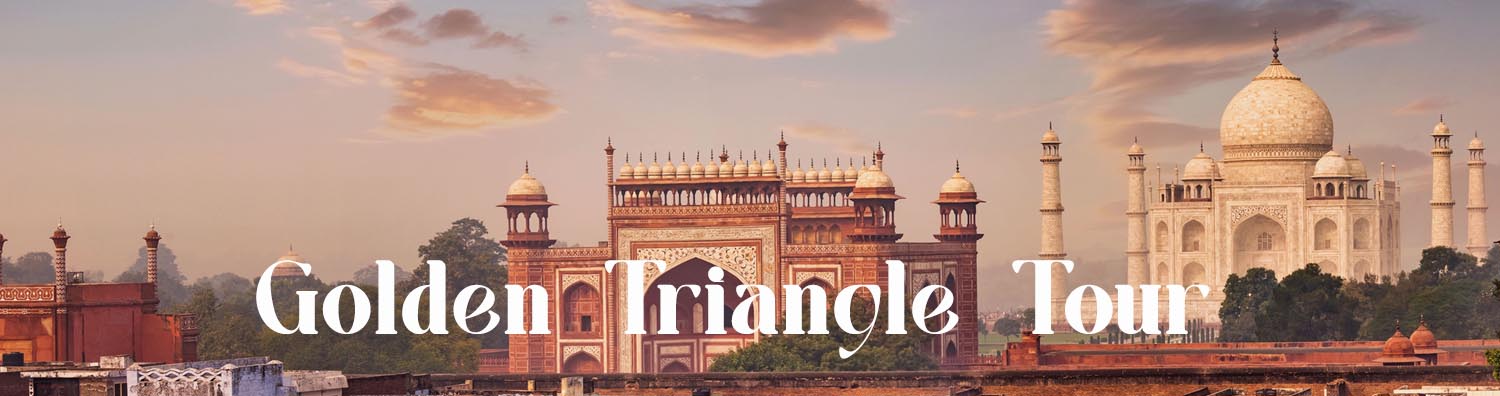

Northern India Art & Architecture Journey is an amazing exploration of the history, culture, art, architecture of northern India’s most fascinating sites covering almost 3000 years of the civilization of the sub-continent. Relish the luxury of 5-star & palace hotels in central locations. New Delhi was planned as new capital of the British East India Company in 1911 but the World War I disrupted the plans. The capital construction finished and New Delhi became India’s capital on February 13, 1931. Agra was capital of many Mughal Emperors and became world renowned for the TAJ MAHAL. Rajasthan is the colorful & historically most important state of India. The culture and traditions evolved over centuries under the mighty Maharajas continue to be an integral part of the life of people in these erstwhile kingdoms of Rajasthan. Jaipur is India’s first planned city (built 1727) and was painted in pink color to honor the visit of Prince of Wales Albert Edward. Witness the finest in art, architecture and culture of northern India in this fascinating journey of 13 overnights / 15 days.
SCHEDULES:
October 22 to November 5, 2026 (with visits to the Taj Mahal in full moonlight and at sunrise)
November 7 to 21, 2026 (with visit to the Taj Mahal at sunrise)
Schedule
Board flight AI174 at 10 PM. (please call for other airport departures)
Day 2, KOLKATA – NEW DELHI:
Arrive in Kolkata at 2.45 PM, after stop depart with same flight at 4 PM and arrive in Indira Gandhi International Airport in New Delhi at 6.25 PM. After traditional Indian welcome with Merigold garlands at the airport, transfer to Maidens Hotel in Civil Lines of Old Delhi. Maidens Hotel was established in 1903 to host the attending dignitaries during the 1903 Delhi Durbar, held to celebrate the coronation of King Edward VII and Queen Alexandra as Emperor and Empress of India. The two full weeks of festivities were devised in meticulous detail by Lord Curzon with a dazzling display of pomp, power and split-second timing. In the first Delhi Darbar Queen Victoria was proclaimed the Empress of India in 1877 after the failed uprising against the British East India Company.
The third Delhi Darbar was remarkable because it was the only one for which the British monarchs King George V and Queen Mary visited India and announced the moving of India’s capital from Calcutta to Delhi. Maidens remained the hotel of choice for the discerning through the decades. When Sir Edwin Lutyens (the architect of New Delhi) won the commission to build a new capital for the British Empire’s jewel, his aim was to create a garden city ‘with room for endless expansion’. The city has expanded to be the capital of the world’s largest democracy, while its spacious core of immaculately designed and executed landmark government and civic buildings throb with activity, making New Delhi arguably the most successful planned city of the 20th century. Lutyens’ masterpiece, Viceroys House (Rashtrapati Bhawan) and other government buildings of New Delhi were planned by him. In 1994 The Maidens Hotel was declared a Heritage Hotel.
After breakfast in hotel, sightseeing of Qutub Minar minaret and the mosque (a UNESCO World Heritage Site). Its construction was started by the first Islamic Sultan of Delhi, Qutbuddin Aibak in 1198 CE. Qutbuddin-Aibak was born in Turkestan of ethnic Mamluk descent. This was a region where youth went out to neighboring countries and joined their armies as mercenaries. They were enslaved when the army they were fighting with lost. Qutbuddin was sold to the Qazi (Islamic judge) of Nishapur in Persia. There he became favorite of his master because of his skills of horse-riding and archery among other warrior abilities. Qazi’s sons were jealous and they sold him after the Qazi’s death. He ended up as slave of Sultan Muhammad of Ghur province of Afghanistan. He led Sultan of Ghur’s army in the 1st and 2nd battle of Tarain and was appointed Governor of Lalkot, the capital of the last Hindu Chauhan dynasty kingdom. When Muhammad of Ghur was assassinated, Qutbuddin-Aibak declared himself sovereign monarch and started the construction of Qutub Jami Mosque (a.k.a. Quwwat ul Islam Mosque) and Qutub Minar. The construction of minaret did not complete in his lifetime and many later Islamic Sultans of various successive dynasties left their mark on this monument, which is now 5 stories high and 73 meters or 240 feet tall. The mosque was constructed using architectural elements of 27 Hindu and Jain temples that were demolished to build it. Much of the decorative pillars and facades of walls in the mosque were used without alteration in the new mosque, only the Arabic verses from the Quran were added new, sculpted by Hindu artisans who did not know the Arabic language and curved the endings of letters as they did with Sanskrit Devnagari script carvings.
Later sightseeing of the Second Mughal Emperor Humayun’s Tomb – its architecture may have influenced the construction of the Taj Mahal in Agra. Emperor Humayun died just six months after winning the throne of Delhi in 1556 CE. His widow, Hamida Bano Begum (a.k.a. Haji Begum) supervised its construction under Mughal Emperor Akbar’s rule. Having recently returned from Persia and its architect, Mirak Mirza Ghiyath, being a Persian, the monument has elements of Persian and Hindu architecture blended in it. Many later Mughal rulers are also buried in this mausoleum. Humayun’s Tomb is a UNESCO World Heritage Site. Later drive to the India Gate war memorial for a photography stop. Drive past the government buildings of the British colonial period. Lunch in an exclusive city restaurant in Delhi.
After lunch drive to the 17th-century Red Fort in Delhi that was built by Mughal Emperor Shah Jahan (1639 to 1648). Its architect was Ustad Ahmad Lahori. It was the most prominent building in the new capital that Emperor Shahjahan built and called Shahjahanabad. It is known for its massive red sandstone walls and a complex of pavilions, palaces, and gardens designed with ornate Mughal and Persianate architectural styles. Key features include the Diwan-i-Am (Hall of Public Audience) and Diwan-i-Khas (Hall of Private Audience), linked by the Nahr-i-Behisht (Stream of Paradise). It served as the royal residence of the Mughal Emperors until 1857. It was designated a UNESCO World Heritage Site in 2007, recognizing its global cultural importance. It is also the site of India’s annual Independence Day flag hoisting by the Prime Minister of India on the 15th August.
After sightseeing of the Red Fort drive a short distance to the Jama Masjid also built by Mughal Emperor Shahjahan. It was the largest mosque in India. Later enjoy a thrilling rickshaw ride through the busy, narrow lanes of old Delhi to Chandni Chowk Bazaar, which during the reign of Emperor Shahjahan was one of the most luxurious malls designed by Emperor Shah Jahan’s daughter Jahan Ara Begum, where foreign traders used to sell exotic items to royal family and aristocrats. Today it is a very busy street in the nation’s capital. Overnight in The Maidens Hotel.
After breakfast in hotel, check-out and start the day’s sightseeing with Sawai Raja Jai Singh II of Amer and Jaipur’s Jantar Mantar in the heart of Connaught Place, the legendary circular market place designed as part of the British East India Company’s New Delhi. When it was built in circa1724, there was an open field around the astronomical observatory so the measurements in sunlight and moonlight could be made accurately. Later visit the famous National Gallery of Modern Art located in the former royal palace of the Maharajas of Jaipur near India Gate.
After lunch in an exclusive restaurant drive to Agra. On arrival visit the mausoleum of Mirza Ghiaz Beg who was honored by Emperor Jahangir with the title of Itmad-ud-Daulah. The tomb was constructed in white marble and using the art of Pietra-dure for the first time in Mughal India by Empress Nur Jahan for her parents – the Itmad-ud-Daulah and his wife Begum Asmat in 1628. It is a square building with four minarets at the corners. It was designed like a jewelry box and used only various shades of Jasper stone and black marble in the inlay art work in the building. Its exterior and interior decoration is heavily influenced by Persian style reflecting the background of the family of Empress Nur Jahan.
On the way to hotel view the demonstration of the “Pietra-Dure” art (inlay of semi-precious stones) at the Subhash Emporium, Agra’s oldest marble factory where some of the inlaid articles are much finer than even in the Taj Mahal.
After check-in and dinner at Taj View Gateway Hotel, be mesmerized by the ethereal sight of the gleaming white marble of the world-famous Taj Mahal in full moonlight surrounded by complete darkness! This view will be etched in your memory for ever. Overnight in Taj View Gateway Hotel.
Before sunrise experience the highlight of any India tour, the Taj Mahal in the golden glow of sunrise – another unforgettable view of this monument to love. Ample time in the vast complex for photographing and viewing the intricate Pietra Dure (inlay of semi-precious stones in marble art work, used in the exterior and interior of the monument).
Prince Khurram (later Emperor Shahjahan) and his father Prince Salim met their favorite future queens in a mock market called Meena Bazaar to celebrate the Persian new year festival of Nowruz in Agra Fort. Prince Salim wanted to marry Mehr un Nissa Begum, the daughter of Mirza Ghiaz Beg but Emperor Akbar did not want Shi’a influence in the royal family so he asked Mirza Ghiaz Beg to marry his daughter to an Afghan commander and had him posted in Bihar. Prince Khurram was third eldest and not initially in direct line of succession. He was betrothed to Arjumand Bano Begum on April 5, 1607 but Prince Salim delayed his marriage. After death of Emperor Akbar, Prince Salim ascended the throne with the title of Emperor Jahangir and it was only in May 1610 that Mehr un Nissa, the widow of the Afghan commander finally agreed to marry him. He honored her with the title of Nur Jahan (light of the world) after their marriage. One year later on May 10, 1612, Prince Khurram was finally allowed to marry his beloved Arjumand Bano Begum, who was the niece of Mehr un Nissa (her brother’s daughter and granddaughter of Mirza Ghiaz Beg). She received the title of Begum Mumtaj Mahal after her marriage with the Mughal prince. Begum Mumtaj Mahal was 19 years when they married. She was his constant companion and most trusted advisor. Little known in Indian history she was also fabulously rich in her own right because of the trade with the Portuguese naval merchants. During their 19 years of marriage, she gave birth to 14 children of which only 3 daughters and 4 sons survived. The youngest son, Aurangzeb fought a war of succession against his elder brothers. One after the other he won against all of them, had all the brothers killed and then put his father, Emperor Shahjahan, under arrest in his own palaces in Agra Fort. Queen Mumtaj Mahal died on June 17, 1631 while delivering her 14th child, a daughter, Gauhar Ara Begum, who survived and lived in Shahjahanabad to a ripe age of 75 years.
The site of the Taj Mahal mausoleum was a palace of the Maharaja of Amber, Mirza Raja Jai Singh. The emperor asked him to give the palace and grounds back and gave the Mirza Raja other properties in lieu. The queen was temporarily buried in Burhanpur where she died in 1631. The body was transferred to Agra and again temporarily buried in the northwest section of the garden of Taj Mahal where a red sandstone enclosure still marks the site of her temporary burial. The Taj Mahal mausoleum was completed in 1648 according to an inscription on its main gate. The tomb was built exclusively for Queen Mumtaj Mahal, so her grave stone is in the center of the grave chamber. Emperor Shahjahan died on January 16, 1666 in Mussamam Burj Palace in Agra Fort. He was buried by the queen’s side and his grave stone is among the few architectural features in this mausoleum that are not symmetrical. Taj Mahal, is a UNESCO World Heritage Site.
After sightseeing of the Taj Mahal return to hotel for breakfast. Later sightseeing of Agra Fort. Emperor Akbar moved his capital to Agra from Delhi in 1558 but the construction of the Agra Fort started in 1565. It was built on the ruins of an earlier fort named Badalgarh. The first Mughal Emperor Babur had occupied this fort after his victory in the battle of Panipat in 1526 CE. His son, second Mughal Emperor Humayun was crowned in the old fort of Badalgarh in 1530. With about 4000 laborers and craftsmen toiling for 8 years the fort’s construction was completed in 1573.
The entire fort was built with narrow flat brick masonry work and laminated with red sandstone from the stone quarry at Sikri village west of Agra. According the Emperor Akbar’s official biography written by his trusted friend, Abul Fazl, there were about 5000 buildings in the fort. Some of these buildings were demolished to make way for white marble palaces of Emperor Shahjahan, facing the Yamuna River, on the eastern side of the fort. Most of the buildings in western side were converted in to soldier’s barracks by the British East India Company. The western part of the fort is still occupied by Indian military. Emperor Akbar’s style was greatly influenced by the architecture of the states of Gujarat and Bengal. It is also very unique because it reflects Emperor Akbar’s tolerant religious philosophy. The best of example of his architecture is visible in the palace popularly called Jahangiri Mahal. In 1666 the great Maratha warrior, Shivaji met with Emperor Aurangzeb but the Mughal Emperor broke his promise and arrested him. He managed to escape in a spectacular manner by hiding in fruit baskets for distribution to poor. The Jat and Maratha rulers occupied Agra Fort in later years. Finally in 1803 the British East India Company captured it and demolished most of its monuments, only about 30 monuments have survived in the south-eastern side of the fort. In 1983 the Agra Fort was declared a UNESCO World Heritage Monument.
Lunch in Two Saints Bar & Kitchen Restaurant. Subsequently enjoy the demonstration of Zerdozy embossed embroidery at Sanskriti Imperial Gems. This embroidery is believed to be invented by Empress Nur Jahan. This place has perhaps the finest art work done with Zerdozy.
Later visit the mausoleum of the third Mughal Emperor Akbar at Sikandara. The locality is still called Sikandara because the second last ruler of the dynasty that ruled India before Mughals, Sikandar Lodi moved his capital from the old fort of Delhi to this area. He lived for some time in the Badalgarh Fort and started renovating it but the present Agra Fort was constructed on the site by Emperor Akbar. The mausoleum of Emperor Akbar is a five-story building with its top most level built in white marble. The mausoleum and its main gate in the south of the mausoleum were built by Emperor Jahangir and probably Empress Nur Jahan had contributed to its architecture and decorations which reflects her Persian heritage. Dinner and overnight in Taj View Gateway Hotel.
After breakfast drive one hour to Fatehpur Sikri for sightseeing of Mughal Emperor Akbar’s deserted capital and the tomb of Sufi saint Sheikh Salim Chishti in the courtyard of the grand mosque. Emperor Akbar did not have a male heir to his throne for a long time. He came to the Sikri village to seek the blessings of a Sufi saint, Sheikh Salim Chishti, who correctly prophesied that Emperor Akbar would have three sons. The emperor moved with his Hindu queen, Jodha Bai, to Sikri village to live with the saint and started building an alternative capital at the site which was earlier a query for red sandstone. The entire capital was built with red sandstone from the ridge on which it is located. The first-born son was named Salim after the Sufi saint. The second was named Murad or the longed one. The third son was named Daniel, probably influenced by the Jesuit priests from Goa who were invited by the emperor to teach him about Christianity. Emperor Akbar developed the philosophy of “Sulah Qul” – living in harmony with all religions. Later he developed his own religion, Din-i-Ilahi or faith of God. His dear friend and official biographer, Abul Fazl, was among the first to convert to the new religion which he described in “Akbar Nama”.
Visit the grand Friday “Jama Masjid” and the mausoleum of Sheikh Salim Chishti, which was renovated using the white marble by later Mughal Emperors. After Emperor Akbar moved away from this capital, living there only 14 years, the capital was deserted for more than 400 years until Lord Curzon, British Viceroy of India ordered the Archaeological Survey of India to restore this fascinating capital and this renovation work is still going on. The palaces were all covered with wild forest and wild animals lived in the palaces. The “Dargah” or mausoleum of the saint was never deserted and people from Agra and nearby villages have been coming there to seek the saint’s blessings for centuries. The entire archaeological site of palaces and the mosque were declared a UNESCO World Heritage Site in 1986.
After lunch in Laxmi Vilas Palace Hotel in Bharatpur, drive further to Shahpura House in Jaipur. An early 19th Century Palace of Shahpura royal family, it encapsulates the essence of Rajasthan’s aristocratic past. It was the vision and passion of Maharaj Surendra Singh Shahpura which has made this house into an awarded luxury heritage hotel and still remains under the ownership of his descendants. A testament to the architectural brilliance of the Shekhawati region, it stands tall as a living witness to the opulent lifestyle of the bygone era. Its walls whisper stories of illustrious rulers and their majestic courts. Meticulously blending the allure of history with modern comforts, this heritage abode pays homage to its legacy while offering impeccable amenities. The 65 rooms and suits, within the palace are as diverse as they are captivating, each room exuding its own distinct personality.
Dinner and overnight in Shahpura House in Jaipur.
JAIPUR CITY was declared a UNESCO World Heritage City in 2019.
After breakfast full day sightseeing of Amber and Jaipur starting with a drive through the walled pink city to Hawa Mahal, which is mere facade with about 3 feet deep balconies behind latticed screens where royal family women used to sit to watch the royal processions on the street. Drive further north through pink city to Amber Fort to enjoy a majestic elephant ride to the hilltop palaces of Sawai Jai Singh, Mirza Raja Jai Singh and Maharaja Man Singh (one of nine jewels of Emperor Akbar’s cabinet of nobles). On the way back stop at the Jal Mahal Island Palace. Lunch in local restaurant.
Jaipur City was designed by Maharaja Sawai Jai Singh and his principal architectural and city planning advisor, Vidhya Dhar Bhattacharya. Jaipur was painted pink in 1876 by Maharaja Sawai Ram Singh I to welcome Albert Edward, Prince of Wales (later crowned as King Edward VII), with pink symbolizing hospitality. In 1887 a law was passed to maintain all visible facades of buildings in walled city in pink color. On July 6, 2019 the entire walled and painted pink city was declared a UNESCO World Heritage City. In the afternoon visit the City Palace including the Royal portraits gallery in the Diwan-i-Am (Hall of Public Audience), the Sarvatobhadra (Hall of Private Audience), the Mor Chowk (peacock) courtyard of Chandra Mahal, the palace where the present head of the Jaipur royal still resides. When he is in the building the family’s royal flag flies on its roof.
For our group there will be a special tour of the personal palace of the present head of the Jaipur Royal Family, Chandra Mahal. Normally this is closed to general public and tourists.
Later wonder at the 16 working astronomical instruments of the Jantar Mantar observatory of Maharaja Sawai Jai Singh. The Brihat Samrat Yantra (large sundial) here has an accuracy of 2 seconds. This masonry astronomical observatory is the largest and best maintained of the five observatories constructed in Ujjain, Varanasi, New Delhi and Mathura. The observatory in Mathura was demolished in the colonial British East India Company period. The Jaipur Jantar Mantar astronomical observatory was inscribed as UNESCO World Heritage Site in 2010. Dinner and overnight in Shahpura House.
After breakfast drive 82 miles to Mango Masala Restaurant in Ajmer for a tea & snacks stop. Drive further 90 miles to Deogarh Mahal, built in 1670 CE by a powerful clan related to the Sisodia Maharanas of Chittorgarh and Udaipur. The palace is tastefully renovated with period furniture and interior decorations. Relax and explore the palace. The palace was built by many generations of Deogarh royal family and each room is unique in interior architecture and decorations; some are even at different levels requiring to climb a few stairs. After lunch enjoy a walk in the alleys of the village surrounding the palace. From the roof of the palace, one has an impressive view of the village of Deogarh surrounding the palace. Lunch, dinner and overnight in Deogarh Palace.
After breakfast drive to Udaipur, a city of lakes and palaces surrounded by Aravali mountains. On arrival lunch at Ambrai Restaurant in Amet Haveli on the shore of Pichola Lake. In the afternoon visit the Saheliyon-ki-Bari, royal maidens’ garden. Later enjoy a boat ride on Lake Pichola with visit to the Jag Mandir Island Palace, where Mughal Prince Khurram (later Emperor Shahjahan) had sought refuge while revolting against his father, Emperor Jahangir during 1623 and 1624. This island palace’s construction was initiated by Maharana Amar Singh in 1551 CE, continued additions by Maharana Karan Singh (1622-28 CE) and finally completed by Maharana Jagat Singh (1628-52 CE). This palace became world renowned when the famous James Bond film Octopussy was filmed here. In one part of the palace is a heritage hotel. On the terrace and in the courtyard, there is a restaurant where one can order drinks and snacks. Overnight in Shiv Niwas Palace in Udaipur (heritage palace), a crescent-shaped, grand heritage hotel within the City Palace complex, blending Rajput and European styles with stunning Lake Pichola views, opulent decor featuring original royal furnishings, murals, and glass mosaics. It offers luxurious rooms/suites, fine dining, pools, spa, and a glimpse into Mewar royalty’s lavish lifestyle. Originally it was built as guest house for dignitaries visiting the Maharanas of Udaipur until 1978. Dinner and overnight in Shiv Niwas Palace within the Maharana’s city palace complex.
After breakfast start the sightseeing of the City Palace of the Maharanas of Mewar. This is the largest palace complex in Rajasthan. The Maharanas of Mewar had their original capital in the present-day pilgrimage town of Nagda, 30 kilometers or 19 miles north of Udaipur. It was established by the 1st. Maharana, Guhil, in 568 CE. In the 8th. Century CE the capital was moved to Chittor, where the successive Maharanas built the largest Fort and city in contemporary India. Already before the sacking of Chittorgarh by Mughal Emperor Akbar, in February 1568 after a long siege that began in October 1567, the plans for a new capital were under way. The construction of the Mewar Dynasty’s City Palace in Udaipur started in 1559 by Maharana Udai Singh and continued by his successors over a period of about 300 years. Today the visitors see the Mardana (male section) and Zanana (female section) of the museum part of the palace. Apart from this, two other sections of the palace are converted in to hotels: “The Shiv Niwas Palace” and “The Taj Fateh Prakash Palace”. The descendants of the Maharanas of Mewar still reside in one section of the palace. Later walk in front of the City Palace through the Tripolia (3-arched royal entrance) to Jagdish Temple that was constructed by Maharana Jagat Singhji in 1651 for sightseeing. After lunch in “1559 AD Lake Front Villa Restaurant” drive 57 miles to Ranakpur for sightseeing of the Chowmukha Jain Temple that was built between 1437 and 1458. The Ranakpur Jain Temple is an architectural marvel in Rajasthan’s Aravalli hills, famous for its stunning, intricate white marble carvings. It has 1,444 uniquely carved pillars that support 80 domes across 29 halls, creating a labyrinthine interior where the main shrine of Lord Adinath remains visible from all four directions. Built by Dharna Shah under Rana Kumbha, it’s a major Jain pilgrimage site known for its detailed craftsmanship, depicting celestial figures and geometric designs, and is considered a masterpiece of Maru-Gurjara architecture. Dinner and overnight in Fateh Bagh Palace Hotel (5-star).
After breakfast drive to Jodhpur for lunch and sightseeing of the Mehrengarh Fort, Jaswant Thada & Umaid Bhawan Palace Museum in the afternoon. There are artifacts of the Maharajas of Jodhpur and an impressive collection of Jodhpur miniature paintings in one of the palaces in this fort. Dinner and overnight in Ajit Bhawan Palace Hotel (5-star heritage hotel)
After breakfast drive at about 8 AM. On arrival at Samode Palace at about 1.30 PM, be amazed by the splendor of intricately painted Palace in an extensive sightseeing followed by a delicious Rajasthani lunch in the 450 years old luxurious palace. Later drive about 87 miles to arrive at the 250-years old Mandawa Castle at about 5.30 PM. The palace has been over many years painstakingly renovated highlighting its Rajput Mughal architecture with ornate frescoes and intricate paintings depicting themes from Mahabharat and Lord Krishna. Dinner and overnight in Mandawa Castle.
After breakfast in Mandawa Castle visit some of the most famous havelis (aristocratic mansions of the silk route Marwari merchants. Havelis exteriors and interiors have large painted murals depicting a variety of themes not only from Hindu mythology but also interesting and humorous scenes depicting the British colonial period. Sightseeing of the 100-year-old Aakharam ki Haveli near Sonthalia Darawaza. Subsequently sightseeing of Hanuman Prasad Goenka Haveli, Goenka Double Haveli, Murmuria Haveli, Jhunjhunwala Haveli, Mohanlal Saraf Havei, Gulab Rai Ladia Haveli, Bansidhar Newatia Haveli, Laxminarayan Ladia Haveli and Chowkhani Double Haveli. Just across the road from Goenka Double Haveli is the Thakurji Temple that also has beautiful mural paintings depicting scenes from British East India Company Period and 1857 during the First War of Indian Independence. Drive for lunch at Roop Niwas Kothi and sightseeing of Anandilal Poddar and Murarka Havelis in neighboring Nawalgarh. Dinner and overnight in Castle Mandawa.
After breakfast the morning is at leisure and for exploring the castle and its surroundings. After lunch drive 4.5 hours to Holiday Inn Express International Airport. After check-in enough time to refresh and relax. Later farewell dinner and overnight in Holiday Inn Express Hotel.
After breakfast at hotel transfer to Indira Gandhi International Airport. Board the return flight AI 173 at 10h25 AM and arrive in SFO at 1:25 PP, connecting flight at 07:10 pm for FAT from SFO, arrive: 20:20 at FAT.
Additional Information:
PRICE call (559) 443 9709 or email indiatraveller@gmail.com with following hotels (other hotels can be discussed also.)
| City | Hotel | NO. NIGHTS |
|---|---|---|
| New Delhi | Oberoi Maidens Hotel 5-star | 2 |
| AGRA | Taj View 5-star | 2 |
| JAIPUR | Shahpura House | 2 |
| DEOGARH | Deogarh Mahal heritage palace | 1 |
| UDAIPUR | Shiv Niwas Palace 5-star heritage palace | 1 |
| RANAKPUR | Fatehbagh Palace Hotel 5-star | 1 |
| JODHPUR | Ajit Bhawan Palace 5-star heritage | 1 |
| MANDAWA | Mandawa Castle heritage palace | 2 |
| NEW DELHI | Holiday Inn Express 5-star | 1 |
PRIVATE TOURS
| Number of Persons | Price Per Person |
|---|---|
| Single person traveling alone | US$ 6,930.00 |
| 2 persons traveling together | US$ 5,900.00 |
Group Tours
| NUMBER OF PERSONS | PRICE PER PERSON | SINGLE OCCUPANCY SUPPLEMENT |
|---|---|---|
| 3-4 persons traveling together | US$ 5,580.00 | US$ 1,170 |
| 5-9 persons traveling together | US$ 5,270.00 | US$ 1,170 |
| 10-14 persons traveling together | US$ 4,860.00 | US$ 1,170 |
| 15-20 persons traveling together | US$ 4,660.00 | US$ 1,170 |
| 21-30 persons traveling together | US$ 4,540.00 | US$ 1,170 |
The price with above mentioned hotels includes:
- Roundtrip international airfare with connecting flights from/to Fresno (San Francisco – New Delhi) – please contact us for flights from other airports.
- 15 days including international flight time/ 13 overnights in the mentioned or similar hotels inclusive of taxes on double or twin room occupancy basis
- Daily gourmet buffet breakfasts and exclusive dinners at your 5-star / heritage hotels.
- Lunches in city restaurants.
- City sightseeing and intercity travel by air-conditioned coach with 2 bottles of aeriated drinks like Coco-Cola etc. and water.
For up to 4 persons medium size air-conditioned car / SUV with 2 bottles of aeriated drinks like Coco-Cola etc. and water - Group escort in India
- Assistance at each city by our company representative.
- English speaking Local guides in each city
- Rickshaw ride at Jama Mosque in Delhi.
- Boat ride at Lake Pichola Udaipur
- Elephant ride at Amber Fort in Jaipur.
- All taxes, parking fees, interstate taxes, state taxes, driver’s allowance etc.
Not Included in the price:
- Cost of Travel Insurance, many plans are available online.
- US citizens require their passports to be valid for six months after return date from India – for India e-visa please go to: https://indianvisaonline.gov.in/evisa/tvoa.html
- Single hotel room occupancy supplement (mentioned separately above)
- Alcoholic & non-alcoholic drinks in restaurants and hotels
- Still and Video Camera Fees at monuments
- Tips to drivers, guides and porters as well as any item not included in the above.
- All expenses of personal nature like telephone calls / laundry / room service charges in hotels etc. All drinks in hotels & restaurants etc.
Payment:
An advance payment of US$ 1,500.00 with reservation by check or by Visa, Mastercard. Discover or American Express credit cards. Balance will be due and payable 30 days before departure date from San Francisco.